

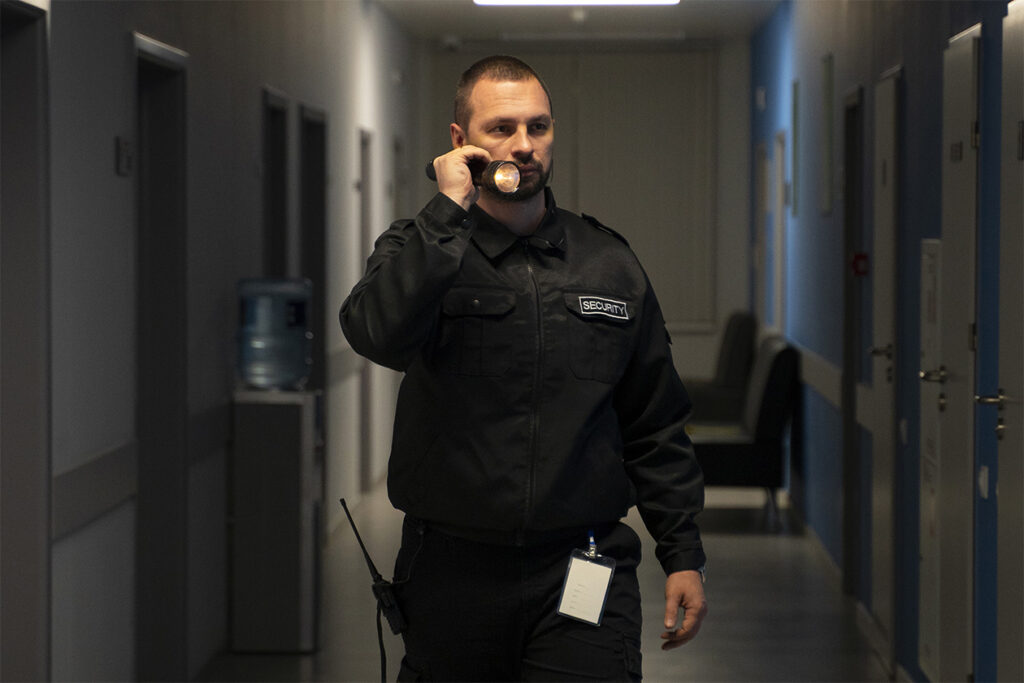
Security guards have been the traditional choice for property protection for decades, but the harsh reality is that human-based security is fundamentally flawed in ways that most property owners don’t fully understand until it’s too late. While the image of a uniformed guard provides psychological comfort, the actual security value delivered often falls dramatically short of expectations—and the costs extend far beyond the obvious salary expenses.
The average security guard costs $150,000-$200,000 annually when you factor in wages, benefits, insurance, training, and management overhead. Yet studies consistently show that traditional guard services miss 70-80% of security incidents due to human limitations, coverage gaps, and operational constraints that are inherent to human-based security models.
More concerning is what happens when security incidents do occur. Guards frequently become victims themselves during serious crimes, creating additional liability exposure and workers’ compensation claims. They may inadequately document incidents, fail to follow proper procedures under stress, or even contribute to problems through poor judgment, inadequate training, or conflicts of interest.
The rise of professional remote monitoring has exposed these fundamental weaknesses by providing a direct comparison. Properties that switch from guard services to remote monitoring typically see 60-90% reductions in security incidents while cutting security costs by 40-60%. This isn’t just about technology replacing humans—it’s about professional security specialists using advanced tools to provide superior protection that individual guards simply cannot match.
This comprehensive analysis exposes the five most costly weaknesses inherent in traditional security guard services and demonstrates how modern remote monitoring addresses each limitation while delivering superior live protection at significantly lower total cost.
The Hidden Costs of Security Guard Services
True Cost Analysis Beyond Hourly Wages
Comprehensive Guard Service Expenses: Most property owners dramatically underestimate the total cost of guard services:
Direct Labor Costs:
- Base wages: $15-25 per hour for basic guards, $20-35 for experienced personnel
- Overtime premiums: Time-and-a-half for holidays, coverage shortages, and extended shifts
- Benefits packages: Health insurance, workers’ compensation, unemployment, and Social Security
- Training expenses: Initial certification, ongoing education, and specialized skill development
Hidden Operational Costs:
- Supervision and management: Guard company overhead, site supervisors, and quality control
- Insurance premiums: General liability, professional liability, and bonding costs
- Equipment and uniforms: Radios, flashlights, uniforms, and specialized security equipment
- Replacement costs: Frequent turnover requiring constant recruitment and retraining
Total Annual Investment: A single 24/7 guard position typically costs $150,000-$220,000 annually, while two-guard coverage for larger properties can exceed $400,000-$500,000 per year—before considering the additional costs outlined below.
Liability and Risk Exposures
Legal and Financial Vulnerabilities: Guard services create significant liability exposures that property owners often overlook:
Workers’ Compensation Claims:
- Injury rates: Security guards experience higher injury rates than most occupations
- Assault claims: Guards may be injured during confrontations or criminal incidents
- Stress-related claims: Mental health issues from traumatic experiences or workplace pressure
- Long-term disability: Serious injuries can create ongoing financial obligations
Professional Liability Issues:
- Negligent security claims: Lawsuits alleging inadequate protection or poor guard performance
- Constitutional violations: Improper detention, excessive force, or civil rights violations
- Discrimination claims: Guard actions that create liability for property owners
- Criminal activity: Background check failures allowing criminal guards access to properties
Weakness #1: Limited Coverage and Attention Span
The Human Attention Problem
Physiological Limitations: Human beings are fundamentally limited in their ability to maintain vigilant observation over extended periods:
Attention Span Reality:
- Vigilance decrement: Human attention drops 50% after just 30 minutes of monitoring
- Fatigue effects: Mental alertness decreases significantly during long shifts
- Boredom factor: Routine security duties become monotonous, reducing effectiveness
- Distraction susceptibility: Guards are easily distracted by personal devices, conversations, or non-security activities
Coverage Constraints:
- Single-point coverage: One guard can only observe one location at a time
- Movement limitations: Guards must choose between patrol routes and fixed observation
- Break requirements: Federal labor laws mandate breaks, creating coverage gaps
- Personal needs: Bathroom breaks, meals, and personal calls interrupt surveillance
Physical Coverage Limitations
Geographic and Temporal Constraints: Traditional guards face inherent limitations in property coverage:
Patrol Pattern Predictability:
- Routine routes: Criminals learn guard patterns and time their activities accordingly
- Coverage gaps: Large properties cannot be comprehensively monitored by single guards
- Response delays: Guards must physically travel to investigate incidents
- Visibility limitations: Human eyesight and hearing have natural range restrictions
Multi-Level Properties:
- Vertical coverage: Guards cannot simultaneously monitor multiple floors like residential or office buildings especially those building with multiple levels like hotels.
- Perimeter challenges: Large properties require guards to choose between interior and exterior monitoring
- Blind spot acceptance: Guards accept areas they cannot see as inherent limitations
- Equipment constraints: Handheld radios and flashlights provide limited technological assistance
Comparison: Remote Monitoring Coverage
Comprehensive Surveillance Advantages: Remote monitoring eliminates human coverage limitations through technology and professional oversight:
Simultaneous Multi-Point Observation:
- Multiple camera feeds: Professional operators monitor 20-40 cameras simultaneously
- Overlapping coverage: Camera placement eliminates blind spots that guards cannot cover
- Continuous vigilance: No attention span limitations or fatigue affecting observation quality
- Instant communication: Immediate alerts and notifications without travel time
24/7 Professional Oversight:
- Trained specialists: Security professionals trained specifically in threat detection and quick response
- Shift rotations: Fresh operators maintaining peak alertness throughout coverage periods
- Backup systems: Multiple operators and redundant equipment preventing coverage gaps
- Advanced analytics: AI-powered systems augmenting human observation with automated threat detection
Weakness #2: Inconsistent Training and Experience Levels
Industry Training Standards Problem
Minimum Training Requirements: Security guard training standards vary dramatically and often provide inadequate preparation:
Basic Certification Limitations:
- 8-40 hour requirements: Most states require minimal initial training
- Generic curriculum: Basic training rarely addresses specific property or threat types
- No ongoing education: Many jurisdictions lack continuing education requirements
- Self-paced learning: Online training without practical skills verification
Skill Development Gaps:
- Threat recognition: Limited training in identifying suspicious behavior or criminal activity
- Emergency response: Inadequate preparation for medical emergencies, fires, or violence
- Legal knowledge: Poor understanding of detention authority, use of force, and constitutional rights
- Technology proficiency: Minimal training on security systems, cameras, and communication equipment
Experience and Qualification Variations
Personnel Quality Inconsistencies: Security guard companies often struggle with recruitment and retention challenges:
High Turnover Impact:
- Industry average: 100-200% annual turnover rate in security guard industry
- Experience loss: Constantly training new guards who lack property-specific knowledge
- Quality variation: Wide range of experience levels and professional commitment
- Institutional knowledge: Frequent turnover prevents development of site-specific expertise
Background and Screening Issues:
- Inconsistent standards: Background check requirements vary significantly between companies
- Criminal history: Some guards have criminal backgrounds that create liability risks
- Financial pressures: Low wages attract personnel who may be susceptible to bribery or theft
- Secondary employment: Guards often work multiple jobs, affecting focus and energy levels
Comparison: Professional Monitoring Specialists
Specialized Training and Expertise: Remote monitoring operators receive comprehensive, ongoing training specific to security applications:
Professional Certification:
- 40+ hour initial training: Comprehensive security education covering law, procedures, and technology
- Ongoing education: Monthly training updates on new threats, techniques, and regulations
- Specialized skills: Training specific to different property types and threat environments
- Performance monitoring: Regular evaluation and skills testing ensuring competency maintenance
Career Security Professionals:
- Lower turnover: Professional monitoring centers experience 80% lower turnover than guard services
- Dedicated expertise: Operators focus exclusively on security monitoring rather than multiple responsibilities
- Advanced training: Continuous education in threat assessment, emergency response, and legal requirements
- Technology proficiency: Expert-level knowledge of surveillance systems, analytics, and response coordination
Weakness #3: Response Time Limitations and Emergency Coordination
Physical Response Constraints
Time-Distance Challenges: Guards face fundamental limitations in responding to incidents across large properties:
Response Time Reality:
- Walking/running speed: Physical movement to incident locations takes significant time
- Property size factors: Large facilities may require 5-10 minutes for guards to reach remote areas
- Multiple incident challenges: Guards cannot respond to simultaneous incidents in different locations
- Vehicle access limitations: Many areas require foot access, slowing response times
Emergency Coordination Deficiencies:
- Communication delays: Guards must use radios or phones to contact emergency services
- Information accuracy: Stress and urgency often result in incomplete or inaccurate information
- Coordination complexity: Guards struggle to manage multiple communications while responding to incidents
- Documentation failures: Emergency situations often prevent proper incident documentation
Decision-Making Under Pressure
Stress Response Limitations: Individual guards make critical decisions under pressure without backup support:
Judgment Challenges:
- Fight-or-flight response: Stress hormones affect decision-making ability during crises
- Training limitations: Basic guard training provides minimal preparation for complex emergency situations
- Isolation factors: Guards make critical decisions alone without immediate supervisor consultation
- Legal liability: Poor decisions under pressure create significant liability for property owners
Authority and Capability Gaps:
- Limited detention authority: Guards have restricted legal authority compared to law enforcement
- Use of force constraints: Unclear guidelines create liability risks during confrontations
- Medical emergency limitations: Most guards lack EMT training for serious medical incidents
- Fire emergency coordination: Basic fire safety training insufficient for complex emergency coordination
Comparison: Professional Emergency Response
Coordinated Response Capabilities: Remote monitoring provides superior emergency response through professional coordination:
Immediate Response Activation:
- Instant detection: Camera-based monitoring detects incidents as they develop
- Professional assessment: Trained operators evaluate situations and determine appropriate responses
- Multi-agency coordination: Simultaneous notification of police, fire, medical, and property management
- Real-time updates: Continuous situation assessment and information updates to responding agencies
Specialized Response Protocols:
- Incident-specific procedures: Detailed response protocols for different emergency types
- Evidence preservation: Automatic recording and documentation of incidents for investigation
- Chain of command: Clear escalation procedures ensuring appropriate authority involvement
- Legal compliance: Response procedures designed to minimize liability and ensure legal compliance
Weakness #4: High Costs with Limited Value
Total Cost of Ownership Analysis
True Guard Service Expenses: Comprehensive cost analysis reveals guard services deliver poor value relative to their total investment:
Annual Cost Breakdown (Single 24/7 Position):
- Base wages: $131,400 (3 guards × $15/hour × 8,760 hours)
- Benefits and taxes: $39,420 (30% of wages)
- Insurance premiums: $15,000-25,000 (liability, workers’ comp, bonding)
- Training and management: $8,000-12,000 (initial and ongoing)
- Equipment and overhead: $5,000-8,000 (uniforms, radios, supervision)
- Total annual cost: $200,000-220,000 for basic coverage
Additional Hidden Costs:
- Overtime premiums: $15,000-30,000 annually for holiday and sick coverage
- Turnover costs: $3,000-5,000 per replacement guard
- Quality issues: Costs associated with incidents missed or mishandled by guards
- Liability exposure: Potential costs from workers’ compensation and professional liability claims
Value Delivery Assessment
Limited Protection Capability: Despite high costs, guard services deliver limited actual security value:
Coverage Effectiveness:
- Single-point limitation: Guards can only observe one location at a time
- Attention span issues: Effectiveness decreases significantly during long shifts
- Predictable patterns: Criminals learn guard routines and plan accordingly
- Equipment limitations: Basic tools provide minimal technological advantage
Incident Prevention Capability:
- Deterrent value: Visible guards provide some deterrent effect but limited actual prevention
- Response limitations: Guards often become victims rather than effective responders
- Documentation quality: Incident reports frequently lack detail and accuracy
- Evidence collection: Guards rarely have proper training or equipment for evidence preservation
Comparison: Remote Monitoring Value
Superior Cost-Effectiveness: Remote monitoring delivers significantly better protection at lower total cost:
Comprehensive Cost Comparison:
- System installation: $15,000-50,000 one-time investment
- Monthly monitoring: $2,000-5,000 depending on coverage complexity
- Annual operating cost: $30,000-70,000 including equipment and monitoring
- Total cost savings: 60-70% reduction compared to equivalent guard coverage
Enhanced Protection Value:
- Comprehensive coverage: Simultaneous monitoring of entire property
- Professional expertise: Trained security specialists rather than basic guards
- Advanced technology: High-definition cameras, analytics, and integrated systems
- Documented results: Measurable incident reduction and improved response times
Weakness #5: Vulnerability to Compromise and Human Error
Personal Safety and Liability Risks
Guard Vulnerability During Incidents: Security guards often become victims rather than effective protectors during serious crimes:
Physical Vulnerability:
- Assault targets: Criminals specifically target guards to eliminate resistance
- Weapon disadvantages: Most guards are unarmed against potentially armed criminals
- Isolation factors: Guards work alone without immediate backup support
- Training limitations: Basic guard training provides minimal self-defense or tactical preparation
Liability Creation:
- Escalation risks: Guard confrontations may escalate situations unnecessarily
- Use of force issues: Improper force application creates liability for property owners
- Discrimination potential: Guard actions may create civil rights violation claims
- Workers’ compensation: Guard injuries become property owner financial obligations
Human Error and Judgment Issues
Decision-Making Limitations: Guards make critical decisions without adequate information or support:
Judgment Errors:
- Threat assessment mistakes: Misidentifying legitimate activity as suspicious
- Response inappropriateness: Under-responding to serious threats or over-responding to minor issues
- Communication failures: Providing inaccurate information to emergency responders
- Documentation errors: Incident reports with factual errors or omissions
Integrity and Reliability Concerns:
- Sleeping on duty: Fatigue and boredom leading to unconsciousness during shifts
- Personal device distractions: Cell phones and other devices reducing attention to security duties
- Substance abuse: Drug or alcohol use affecting judgment and performance
- Criminal activity: Guards with access to properties committing theft or other crimes
Comparison: Professional Monitoring Reliability
Systematic Reliability Advantages: Remote monitoring eliminates human vulnerability and error through professional systems:
Operator Safety:
- Remote location: Monitoring operators work in secure facilities away from potential threats
- Multiple operator backup: Team coverage preventing single points of failure
- Supervisor oversight: Constant management ensuring proper procedures and performance
- Professional environment: Controlled workplace minimizing distractions and maintaining focus
Quality Assurance Systems:
- Performance monitoring: All operator activities recorded and reviewed for quality
- Standardized procedures: Detailed protocols ensuring consistent response to different situations
- Training verification: Regular testing and certification ensuring competency maintenance
- Technology reliability: Redundant systems and backup equipment preventing coverage failures
Industry-Specific Guard Service Failures
Construction Site Security Challenges
Specialized Environment Problems: Construction sites present unique challenges that general security guards are ill-equipped to handle:
Site-Specific Knowledge Gaps:
- Equipment identification: Guards often cannot distinguish between legitimate and suspicious equipment access
- Contractor verification: Lack of familiarity with authorized personnel and legitimate activities
- Safety hazards: Construction sites present dangerous conditions that guards are unprepared to navigate
- Environmental changes: Daily site changes create new vulnerabilities that guards cannot adapt to quickly
High-Value Target Vulnerabilities:
- Equipment theft expertise: Professional thieves target construction equipment requiring specialized knowledge to identify
- Metal theft recognition: Copper, steel, and other valuable materials require expert knowledge to protect effectively
- Tool security: Thousands of dollars in tools across large sites impossible for single guards to monitor
- Material protection: Lumber, fixtures, and building materials present diverse theft opportunities
Commercial Property Guard Limitations
Multi-Tenant Environment Challenges: Commercial properties present complex security requirements beyond basic guard capabilities:
Tenant Coordination Issues:
- Access management: Guards struggle to maintain current knowledge of authorized personnel across multiple tenants
- After-hours activities: Difficulty distinguishing between legitimate tenant activities and unauthorized access
- Visitor management: Complex visitor protocols across different businesses creating confusion and security gaps
- Emergency procedures: Different tenant requirements for emergency response and evacuation procedures
Liability Exposure Factors:
- Inadequate training: Guards lack specialized knowledge for commercial property liability issues
- Documentation failures: Poor incident reporting creating liability exposure for property owners
- Response inconsistency: Variable guard quality leading to inconsistent emergency response
- Professional liability: Guard actions creating claims against property owners and management companies
Retail Environment Security Failures
Loss Prevention Expertise Gap: Retail security requires specialized knowledge that general guards typically lack:
Shoplifting Detection Limitations:
- Behavioral recognition: Guards often miss subtle indicators of shoplifting behavior
- Legal knowledge gaps: Poor understanding of detention authority and proper procedures
- Technology integration: Inability to effectively use POS integration and analytics for loss prevention
- Evidence handling: Inadequate training in evidence preservation for prosecution support
Customer Service Balance:
- Intimidation factor: Uniformed guards may create unwelcoming atmosphere affecting customer experience
- Discrimination risks: Guard profiling creating liability exposure and customer relations problems
- Conflict escalation: Poor customer interaction skills escalating minor disputes into major incidents
- Sales interference: Guard presence and actions may interfere with sales activities and customer comfort
The Remote Monitoring Advantage
Professional Security Operations
Comprehensive Monitoring Center Capabilities: Remote monitoring delivers professional security through specialized facilities and trained personnel:
Advanced Technology Integration:
- High-definition surveillance: Crystal-clear images enabling positive identification and evidence quality documentation
- Intelligent analytics: AI-powered systems detecting suspicious behavior and automatic threat assessment
- Multi-camera coordination: Simultaneous monitoring of dozens of cameras providing complete property coverage
- Integration capabilities: Connection with access control, alarms, and building management systems
Professional Staff Excellence:
- Specialized training: 40+ hours initial training plus ongoing monthly education in security procedures
- Career professionals: Full-time security specialists rather than part-time or transitional workers
- Performance standards: Regular evaluation and quality assurance ensuring consistent high performance
- Management oversight: Supervisors and managers ensuring proper procedures and optimal response
Measurable Performance Improvements
Documented Results: Properties switching from guard services to remote monitoring consistently see dramatic improvements:
Incident Reduction:
- Crime prevention: 60-90% reduction in theft, vandalism, and unauthorized access
- Response improvement: Average response time reduction from 15-20 minutes to 30-60 seconds
- Documentation quality: Professional incident reports with video evidence and detailed analysis
- Legal admissibility: High-quality evidence supporting prosecution and insurance claims
Operational Benefits:
- Cost reduction: 40-70% lower total security costs compared to equivalent guard coverage
- Reliability improvement: Elimination of coverage gaps from guard absences, breaks, or turnover
- Liability reduction: Professional procedures and documentation reducing exposure to claims
- Performance consistency: Standardized response and documentation across all incidents
Integration and Scalability
Business System Integration: Remote monitoring integrates with existing business operations in ways guard services cannot:
Technology Coordination:
- Access control integration: Coordinated camera entry point for monitoring and authorization verification
- Alarm system coordination: Intelligent alarm verification reducing false dispatches
- Building automation: Integration with lighting, HVAC, and other building systems
- Mobile connectivity: Real-time property owner access and notification capabilities
Scalable Growth:
- Multi-location management: Centralized monitoring for multiple properties from single platform
- Expansion capability: Easy addition of cameras and coverage areas without proportional cost increases
- Feature enhancement: Regular technology updates and capability improvements
- Performance optimization: Continuous analysis and improvement of security effectiveness
Implementation Strategy: Transitioning from Guards to Remote Monitoring
Assessment and Planning
Current Security Evaluation: Proper transition requires comprehensive assessment of existing guard service performance:
Guard Service Analysis:
- Incident tracking: Document current guard service effectiveness and incident response history
- Cost analysis: Calculate true total cost of guard services including hidden expenses
- Coverage assessment: Identify gaps and limitations in current guard coverage
- Performance issues: Document problems with current guard service quality and reliability
Remote Monitoring Design:
- Coverage requirements: Determine optimal camera placement for comprehensive property protection
- Technology selection: Choose appropriate equipment for specific property type and threat environment
- Integration planning: Coordinate with existing systems and business operations
- Response procedures: Develop protocols for different incident types and emergency situations
Transition Management
Smooth Changeover Process: Careful planning ensures seamless transition without security gaps:
Installation Coordination:
- Phased implementation: Gradual installation while maintaining guard coverage during transition
- System testing: Comprehensive testing and operator training before guard service termination
- Staff notification: Employee communication about security changes and new procedures
- Emergency procedures: Updated protocols for different incident types and response coordination
Performance Validation:
- Initial monitoring: Close observation of system performance during initial weeks
- Feedback integration: Property owner and employee input for system optimization
- Incident analysis: Detailed review of initial incidents to refine procedures and response
- Continuous improvement: Ongoing optimization based on operational experience and performance data
Legal and Regulatory Considerations
Employment Law Implications
Guard Service Termination: Ending guard service contracts requires attention to legal and contractual obligations:
Contract Review:
- Termination clauses: Understanding notice requirements and termination procedures
- Liability transfer: Ensuring proper coverage during transition period
- Equipment return: Protocols for guard company equipment and access credential return
- Documentation preservation: Maintaining incident reports and documentation during transition
Employment Considerations:
- Direct employee guards: Proper termination procedures and potential severance obligations
- Union considerations: Collective bargaining agreements affecting guard service changes
- Discrimination prevention: Ensuring termination decisions don’t create discrimination claims
- Reference policies: Appropriate references and recommendations for terminated guard personnel
Insurance and Liability Adjustments
Coverage Modifications: Transitioning to remote monitoring requires insurance policy adjustments:
Policy Updates:
- Liability coverage: Adjusting coverage for reduced premises liability exposure
- Workers’ compensation: Eliminating coverage for guard employees
- Technology insurance: Adding coverage for surveillance equipment and systems
- Professional liability: Ensuring appropriate coverage for monitoring service providers
Premium Adjustments:
- Rate reductions: Negotiating lower premiums for improved security and reduced liability
- Claim history: Demonstrating improved security for future rate negotiations
- Risk assessment: Working with insurers to document security improvements and risk reduction
- Coverage optimization: Ensuring appropriate coverage for new security model
ROI Calculation and Performance Measurement
Comprehensive Cost-Benefit Analysis
Financial Impact Assessment: Quantifying the financial benefits of transitioning from guards to remote monitoring:
Direct Cost Savings:
- Labor cost elimination: $150,000-220,000 annual savings from guard service termination
- Benefit cost reduction: Elimination of workers’ compensation, health insurance, and other benefit costs
- Insurance premium reduction: 10-25% reduction in liability insurance premiums
- Administrative cost savings: Reduced management overhead for guard supervision and coordination
Indirect Value Creation:
- Incident reduction value: Quantifying prevented losses from improved security effectiveness
- Liability reduction: Reduced exposure to workers’ compensation and professional liability claims
- Operational efficiency: Improved business operations through better security and documentation
- Property value enhancement: Increased property value through documented security improvements
Performance Metrics and Benchmarking
Measurable Improvement Tracking: Establishing metrics to demonstrate remote monitoring superiority:
Security Effectiveness Measures:
- Incident frequency: Comparison of security incidents before and after transition
- Response time improvement: Documentation of faster threat detection and response
- Resolution effectiveness: Analysis of incident outcomes and prevention success
- Evidence quality: Improvement in investigation support and legal proceedings
Operational Impact Assessment:
- Customer satisfaction: Employee and tenant feedback on security improvements
- Business continuity: Reduced disruption from security incidents and false alarms
- Compliance improvement: Better adherence to security policies and procedures
- Stakeholder confidence: Improved confidence from investors, tenants, and customers
Making the Strategic Security Decision
The evidence is overwhelming: traditional security guard services deliver poor value relative to their high cost while creating significant vulnerabilities and liability exposures that most property owners don’t fully understand until faced with serious incidents. The five critical weaknesses—limited coverage, inconsistent training, response limitations, poor cost-effectiveness, and human vulnerability—represent fundamental flaws that cannot be addressed through better guard companies or increased supervision.
Remote monitoring eliminates these inherent weaknesses through professional expertise, advanced technology, and systematic reliability that individual guards simply cannot match. Properties that make the transition consistently see dramatic improvements: 60-90% reduction in security incidents, 40-70% lower total security costs, and elimination of the liability exposures that make guard services increasingly risky in today’s legal environment.
The decision to transition from guard services to remote monitoring isn’t just about cost savings—it’s about achieving superior security performance while reducing risk exposure and gaining operational advantages that support business success. Professional remote monitoring provides the comprehensive coverage, consistent quality, and reliable performance that modern properties require for effective protection.
As security threats continue evolving and becoming more sophisticated, the limitations of human-based security become even more pronounced. Property owners who continue relying on traditional guard services are essentially accepting inferior protection at premium prices while maintaining liability exposures that could be eliminated through professional remote monitoring systems.
Ready to eliminate the costly weaknesses of guard services and achieve superior security performance? Contact Monitex Security today for a comprehensive security assessment that compares your current guard service costs and effectiveness with professional remote monitoring capabilities. Our security experts will demonstrate exactly how remote monitoring delivers better protection at lower cost while eliminating the vulnerabilities and liabilities inherent in traditional guard services.
Frequently Asked Questions
Will removing security guards make my property less secure or create liability issues?
Remote monitoring provides significantly better security than guard services while reducing liability exposure. Professional monitoring operators detect threats faster, coordinate better emergency response, and provide superior documentation—all while eliminating workers’ compensation exposure and guard-related liability risks.
How can remote monitoring operators respond to incidents without being physically present?
Remote operators provide immediate response through audio warnings, light activation, and direct law enforcement coordination. They often intervene and resolve situations before physical response is needed, and when physical response is required, professional emergency responders arrive faster than guards could respond internally.
What happens to my insurance coverage if I eliminate security guards?
Most insurance carriers offer premium reductions for professional monitoring systems while eliminating workers’ compensation requirements for guards. The improved security documentation and incident prevention typically result in lower overall insurance costs and better coverage terms.
Can remote monitoring work for properties that currently require multiple guards?
Remote monitoring is particularly effective for large properties requiring multiple guards. A single monitoring service can provide comprehensive coverage that would require 3-4 guards to match, while delivering superior performance at 60-70% lower cost than multi-guard coverage.
How do I handle the transition period when switching from guards to remote monitoring?
Professional security companies provide detailed transition planning including phased installation, system testing, and coordinated changeover to ensure no security gaps. The transition typically takes 2-4 weeks with guard coverage maintained until remote monitoring is fully operational.
What about employee and tenant concerns about removing visible security presence?
Most employees and tenants prefer remote monitoring once they understand the superior coverage and response capabilities. The elimination of guard-related incidents (conflicts, inappropriate behavior, etc.) often improves overall satisfaction, while visible cameras provide reassurance of professional security presence.
How do I terminate guard service contracts and handle potential legal issues?
Professional security consultants assist with contract review, proper termination procedures, and legal compliance. Most guard service contracts include standard termination clauses, and the transition can be managed to minimize any contractual or legal complications.